Acupuncture in Morristown & Wayne, NJ
Precise, gentle and grounded in thousands of years of clinical practice — delivered with modern sterile technique.
Acupuncture at a glance
- What it is
- Insertion of very fine, sterile needles at specific points to regulate the flow of Qi and stimulate the body's own healing response.
- Session length
- About 60 minutes, with 20–30 minutes of needling. First visit about 90 minutes.
- Does it hurt?
- Usually very little — needles are about as thin as a hair. A brief pinch, then a dull, spreading sensation.
- Typical course
- 4–12 treatments for most conditions; acute problems may need fewer, long-standing problems more.
- Safety
- Sterile, single-use disposable needles only. Serious side effects are rare.
- Where
- Morristown (255 E. Hanover Ave) and Wayne (504 Hamburg Turnpike), NJ.
What is acupuncture?
Acupuncture is part of the overall system of Traditional Chinese Medicine, which also includes herbal medicine, Qigong, Tui Na massage, gua sha, cupping and Eastern nutrition. It is a therapy developed by the ancient Chinese that stimulates designated points on the skin by the insertion of needles.
The Chinese discovered that certain locations — "points" — on the surface of the body are related to internal function. According to that tradition, a network of energy flows through the body and connects these points through channels, or meridians. There are 12 main meridians, each associated with a primary organ system. When the flow of energy is impaired, physical, mental or emotional disorders occur. The goal of acupuncture is to restore the balance of that flow. Points are carefully chosen to disperse blockages and bring your Qi back into balance.
Modern research describes the same process in the language of physiology: stimulating acupuncture points triggers the central nervous system to release biochemicals into the brain, spinal cord and muscles, which in turn stimulate the body's natural healing capabilities and promote physical and emotional well-being.
What happens during an acupuncture visit
Intake & diagnosis
We review your history and current symptoms, take your pulses at the wrist and examine your tongue — two core diagnostic tools of Chinese medicine.
Point selection
Based on your pattern, we choose points on the body, scalp, ears or hands. Points far from the problem area are often used.
Needling & rest
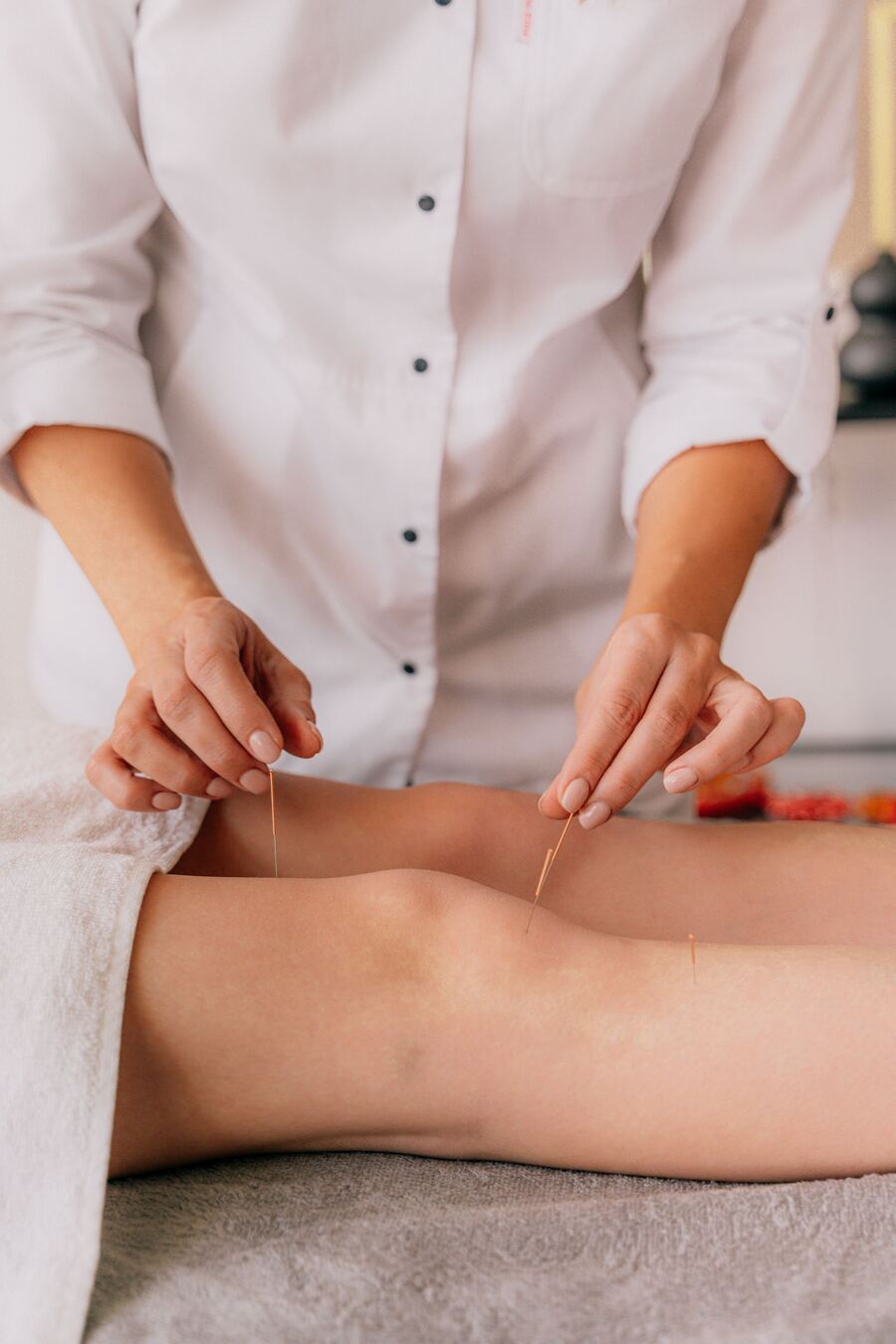
You rest for 20–30 minutes under a warm infrared lamp, with soft music and lights dimmed if you prefer. Electro-stimulation may be added.
Adjunct therapies
Depending on your plan: cupping, gua sha, Tui Na, moxibustion and an herbal prescription or home exercises.
Does acupuncture hurt?
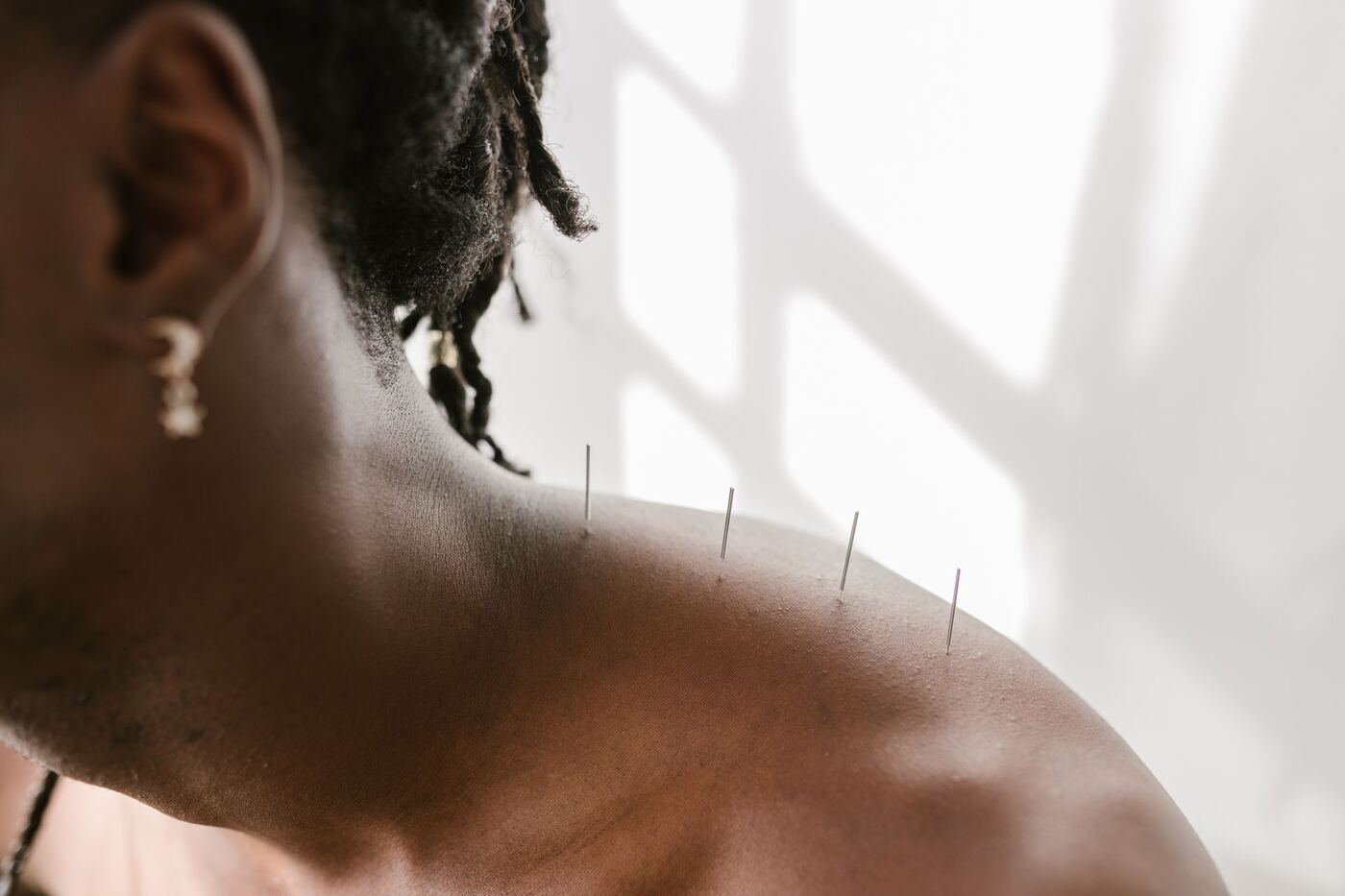
The needles we use are completely different from the hypodermic needles used for injections. They are very thin — about the thickness of a hair — and 10 to 15 acupuncture needles can fit inside a single hypodermic needle. You may feel a slight sensation on insertion, then a dull pressure or "surging" feeling when the needle reaches the Qi at the correct depth. Many patients who describe themselves as afraid of needles tell us afterwards it was much easier than they expected.
Is it safe?
We use only sterile, disposable needles, which are discarded immediately after your treatment. One of the great advantages of acupuncture is the rarity of serious side effects or dependency. Most side effects are minor — occasional dizziness or a drop of bleeding when a needle is withdrawn. Infection at the needle site and other side effects are very rare.
How many treatments will I need?
For minor or recent complaints, such as a simple muscle strain or a common cold, only a few treatments may be necessary. The longer a condition has existed and the more serious it is, the more treatments will be needed; conditions present for years may require several dozen treatments over time. Results tend to be cumulative, so frequency is higher at first — often two or three times a week — then tapers as you improve.
Conditions acupuncture may help
The World Health Organization lists more than 40 conditions for which acupuncture and TCM may be used. The N.I.H. and the American Medical Association have also noted that acupuncture can be helpful for a variety of conditions — and it can be effective when other treatments have failed.
Neurological
Bell's palsy, stroke and paresis, headache and migraine, trigeminal neuralgia, peripheral neuropathy, Ménière's disease, Parkinson's disease, sciatica.
Musculoskeletal
Low back pain, neck pain, frozen shoulder, tennis elbow, osteoarthritis, tendonitis, plantar fasciitis, sports injuries.
Gynecological & Fertility
Infertility, menstrual irregularities, PMS, menopausal symptoms, pregnancy nausea.
Digestive
Heartburn, abdominal pain, constipation, diarrhea, gastritis, colitis, IBS, hiccough.
Emotional
Anxiety, depression, insomnia, stress, addiction and smoking cessation.
Respiratory & ENT
Asthma, bronchitis, colds and allergies, sinusitis, rhinitis, tinnitus, toothache.
More about acupuncture
What is electro-acupuncture?
Electro-acupuncture connects a small, adjustable current (similar to a TENS unit) to two or more needles. It gently twitches and relaxes tight muscles and is useful for nerve pain, chronic headache and paralysis. It is always optional and adjusted to your comfort.
What should I do before and after acupuncture?
Eat a light meal an hour or two beforehand and wear loose, comfortable clothing. Afterwards, drink water, avoid strenuous exercise for the rest of the day and notice how you feel over the next 24–48 hours — that response helps us adjust your next treatment.
Can acupuncture be combined with my medical treatment?
Yes. Acupuncture works well alongside medication, physical therapy and fertility treatment. Please keep your physician informed, and never stop prescribed medication without your doctor's guidance.
Who performs acupuncture at your center?
Licensed acupuncturists only: Ni-Fei Hsieh, L.Ac. and Cindy Hsieh Ren, MS, L.Ac., both NCCAOM board-certified and licensed in New Jersey and New York.
Related treatments
Ready to feel like yourself again?
Call the office nearest you to schedule. New patients should allow about 90 minutes for the first visit, which includes a full health history, pulse and tongue diagnosis and your first treatment.