Zhu's Scalp Acupuncture for Neurological Recovery
A specialized system for paralysis, motor and sensory impairment — taught directly by its founder, Dr. Ming Qing Zhu.
Zhu's Scalp Acupuncture at a glance
- What it is
- A system of acupuncture on specific zones of the scalp, developed by Dr. Ming Qing Zhu, used especially for neurological conditions.
- Commonly used for
- Stroke-related paralysis, aphasia and dysphagia, Bell's palsy, motor and sensory impairment, muscle atrophy, and other central nervous system conditions.
- Your practitioner
- Ni-Fei Hsieh, L.Ac. — completed a clinical fellowship with Dr. Zhu in the U.S. and at JinJiang Hospital, China (ER/ICU), and is a certified Zhu's Scalp Acupuncturist.
- Typical frequency
- Often 3–5 times per week in the early phase, then tapering as function returns.
- Where
- Morristown office; home visits may be arranged for patients with limited mobility.
A specialized system for the nervous system
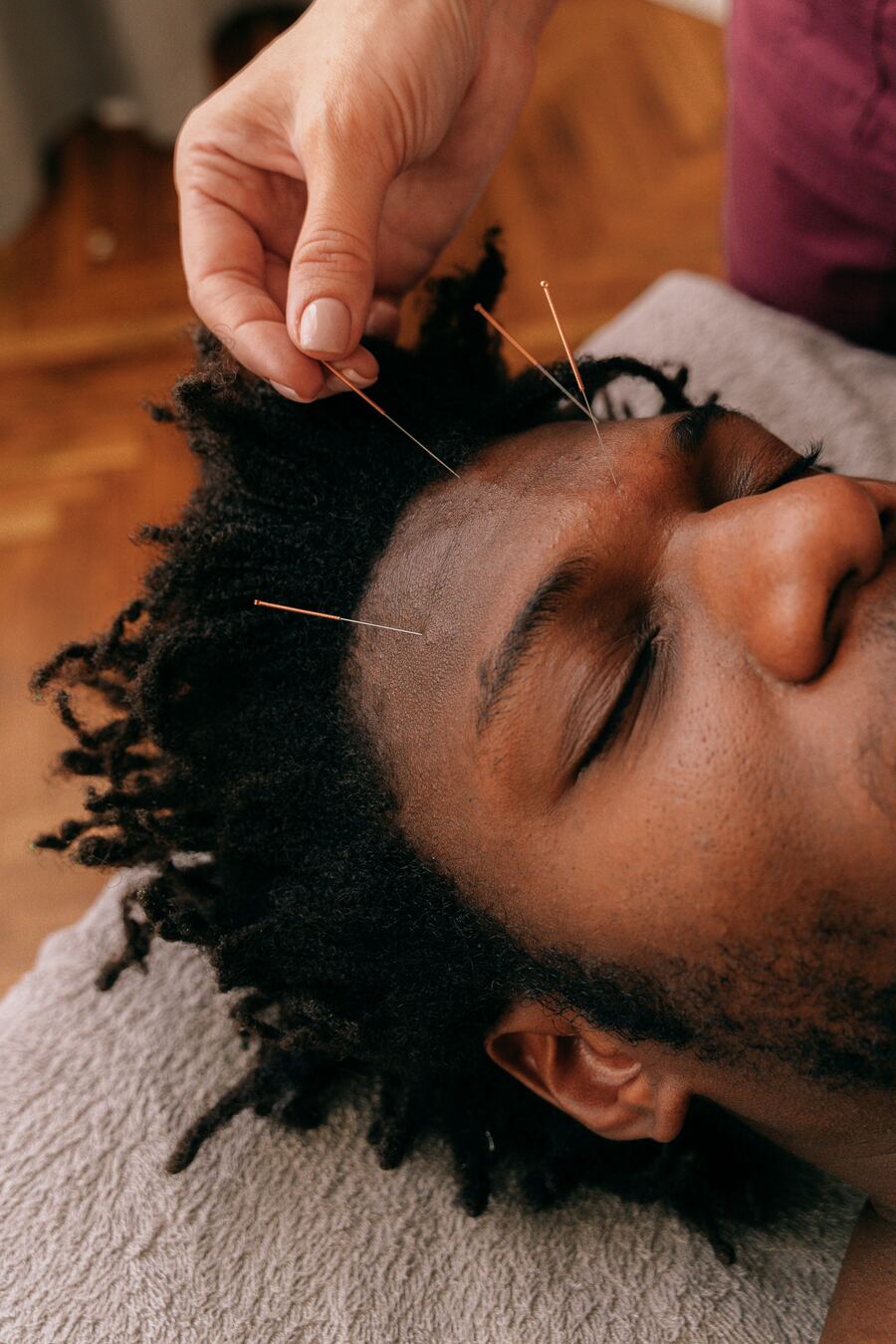
Scalp acupuncture works with zones on the scalp that correspond to functions of the brain and body. Rather than treating only the area where symptoms appear — a weak arm, a drooping face — it engages the regions associated with movement, sensation, speech and balance.
Dr. Ming Qing Zhu (朱明清) developed one of the most respected scalp acupuncture systems in China and spent decades teaching it internationally. Practitioners certified in his system learn specific needling and manipulation techniques, frequently combined with active movement: while the needles are in place, patients are guided to move the affected limb, speak or swallow, linking the stimulation to real function.
Ni-Fei Hsieh completed a clinical fellowship with Dr. Zhu — including in the emergency room and intensive care unit of JinJiang Hospital in China — and is among the certified graduates of Zhu's Scalp Acupuncture. Through his discipleship with Dr. Chong-Kai Wen in Taiwan, he also trained in Wen-Style Modern Acupuncture, which includes a different school of scalp acupuncture.
Conditions treated with scalp acupuncture
After a stroke
Hemiplegia, weakness, spasticity, slurred speech (aphasia) and swallowing difficulty (dysphagia). Stroke recovery →
Facial paralysis
Bell's palsy and facial paralysis after surgery, often combined with body and facial acupuncture. Bell's palsy →
Motor & sensory impairment
Acute and chronic paralysis, numbness, loss of coordination and muscle atrophy.
Neurodegenerative conditions
Supportive care for patients with conditions such as Parkinson's disease and ALS, to help maintain function and comfort.
Dizziness & balance
Vertigo, lightheadedness and balance problems.
Headache & tinnitus
Chronic headache and ringing in the ears, frequently combined with body and ear points.
Why timing and frequency matter
The nervous system responds best to consistent stimulation, and the earlier treatment begins after a neurological event, the more there is to work with. Our patient Ching W. began treatment three days after a stroke, arriving in a wheelchair with slurred speech; after 10 treatments in 16 days, Ching could walk independently and climb stairs without help.
That does not mean it is ever "too late" to try. Another patient, Pricilla O., came to us three years after a stroke, having been told the chance of further recovery was very slim. After about nine months of regular treatment, Pricilla could stand and walk with a walker. We are always honest that progress after a long delay is slower and less predictable — but it is often still possible.
Scalp acupuncture works best as part of a team: please continue your physical, occupational and speech therapy. Many patients find that sessions done on the same day as rehabilitation feel more productive.
Recovery, in their words
In 16 days I had 10 treatments. I can walk on my own now and speak normally.— Ching W.Edison, NJ · age 55
After the last treatment my doctor agreed to remove the feeding tube and I could eat on my own safely.— Seung K.Hoboken, NJ · age 47
I was told the chance of recovery was very slim. Today I can stand and walk on my own with a walker.— Pricilla O.Orange, NJ · age 62
Related pages
Ready to feel like yourself again?
Call the office nearest you to schedule. New patients should allow about 90 minutes for the first visit, which includes a full health history, pulse and tongue diagnosis and your first treatment.