Cupping, Moxibustion & Gua Sha
Time-tested techniques that release tension, warm cold and stagnant areas and draw out what the body no longer needs.
Three classical techniques at a glance
- Cupping
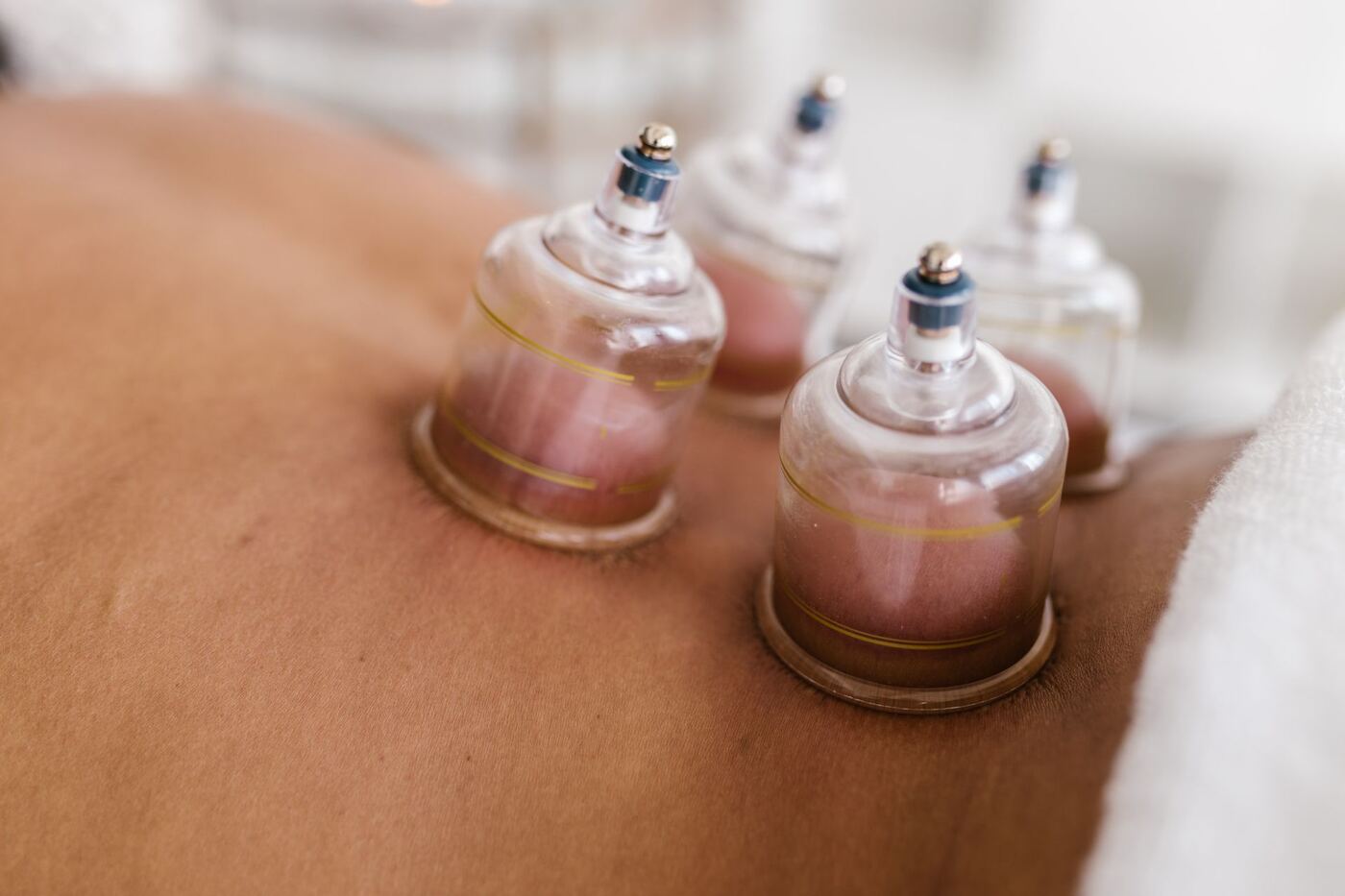
- Glass or bamboo cups create gentle suction on the skin to lift tissue, release tension and draw out pathogenic factors.
- Moxibustion
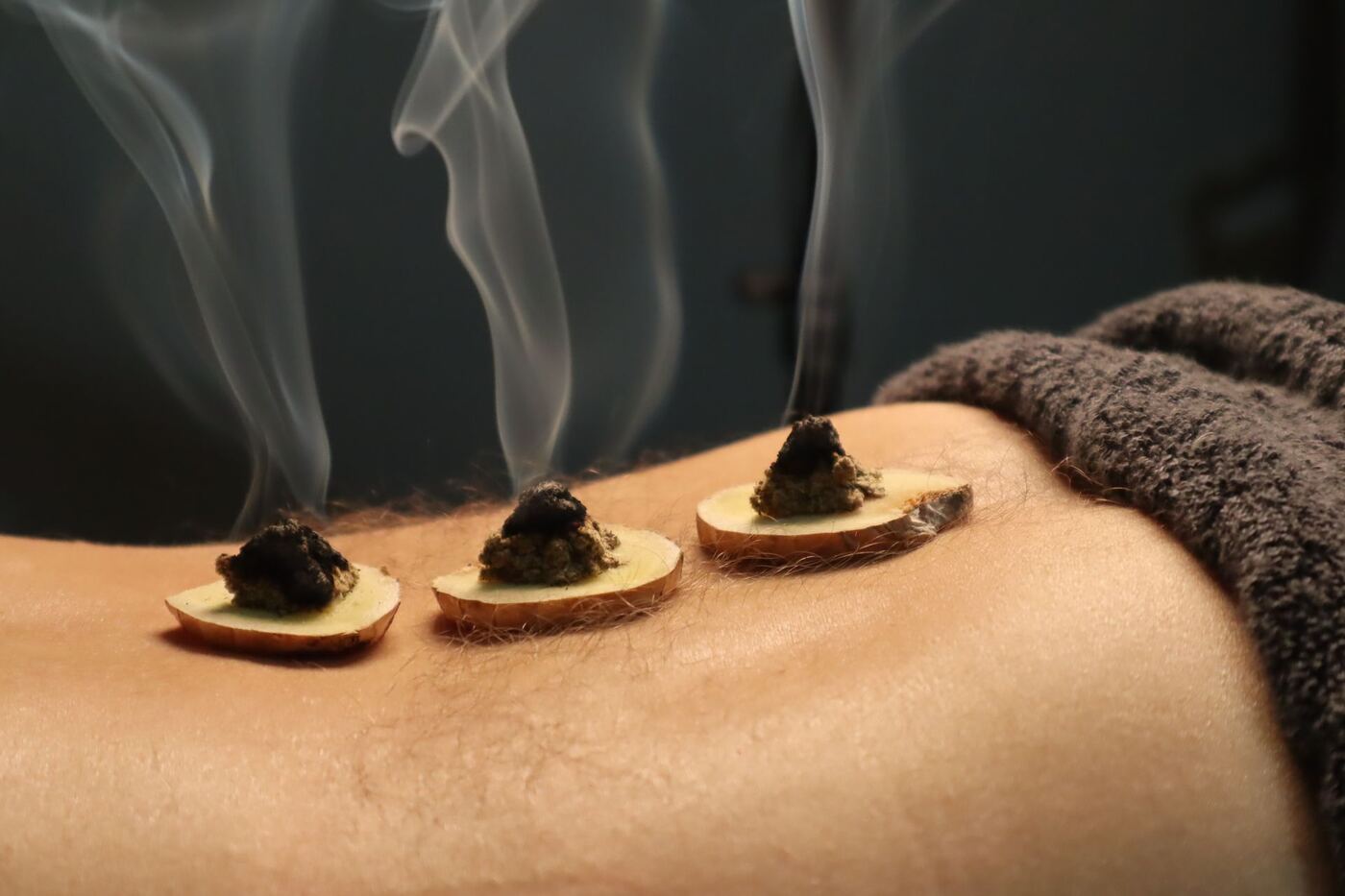
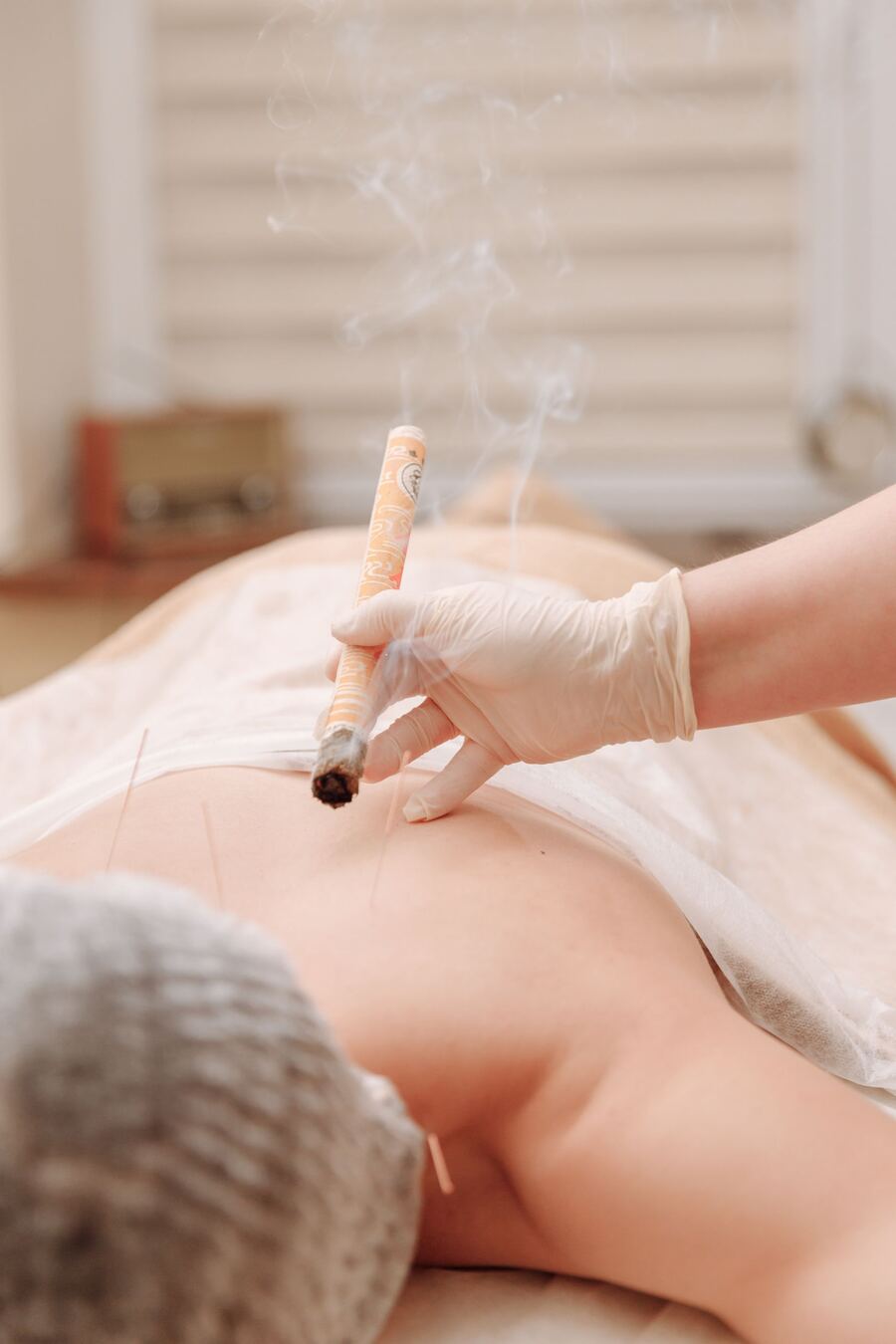
- The dried herb mugwort (Artemisia vulgaris) is burned near or on acupuncture points to warm the Qi and Blood in the channels.
- Gua sha
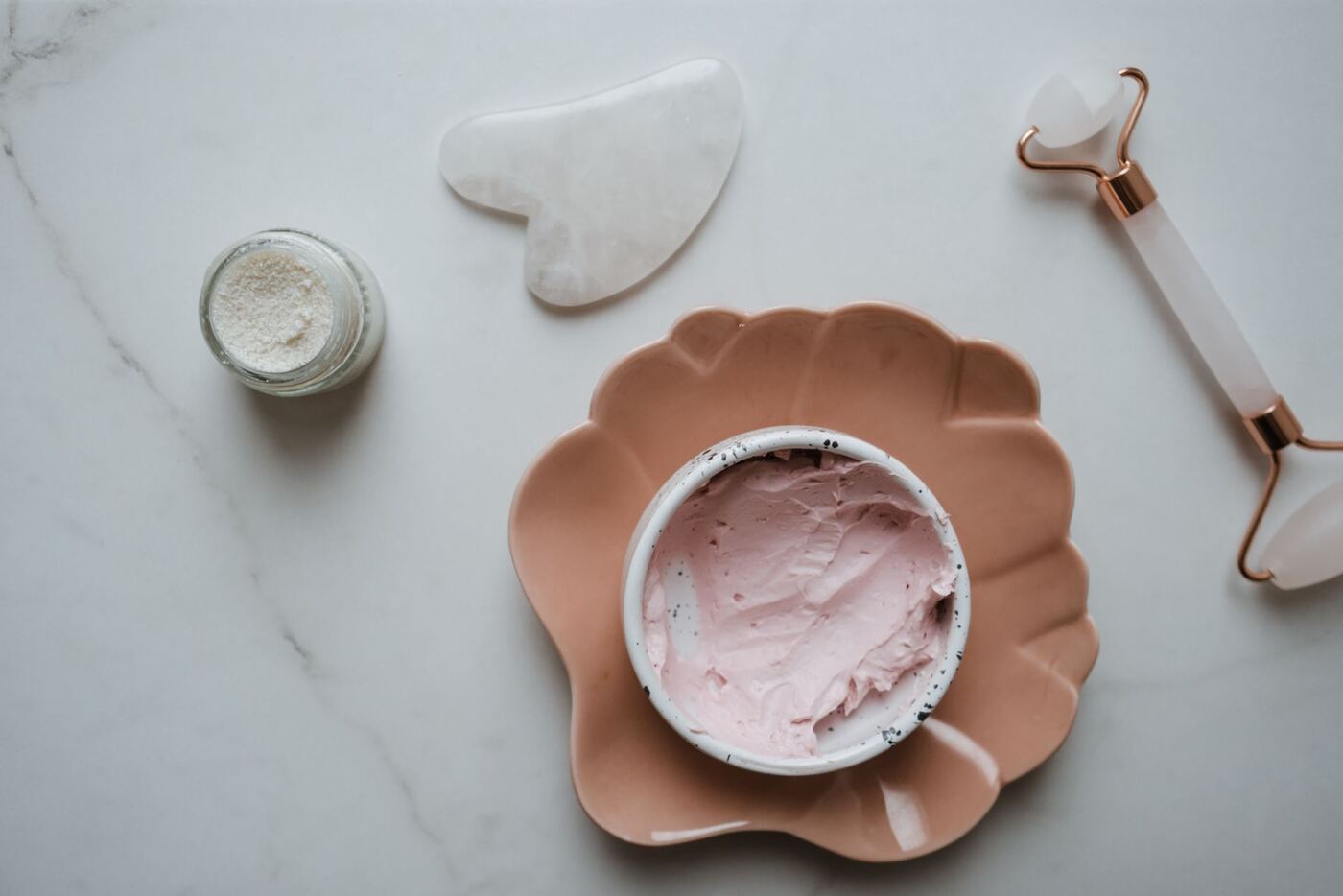
- A smooth, round-edged tool strokes the skin to improve local circulation and release muscle tightness.
- How they're used
- Usually as part of an acupuncture visit, chosen for your condition; they can also be the main focus of a session.
- After treatment
- Cupping and gua sha may leave temporary marks that fade within a few days. Keep the area warm and covered.
Cupping: suction that releases
Cupping involves placing glass or bamboo cups on the skin to create a vacuum. The suction lifts skin and muscle, relaxing tight fascia and drawing fresh circulation into stagnant areas. In Chinese medicine, cupping helps draw pathogenic substances out of the body — which is why it is used both for muscular pain and at the first signs of a cold.
We use cupping for neck, shoulder and back tension, sciatica, chronic headache, respiratory congestion and fatigue. Cups may stay in place for several minutes or be moved gently over oiled skin. Patients with post-accident headaches, for example, often receive cupping on the upper back and shoulders together with electro-acupuncture.
The round marks cupping can leave are not bruises in the usual sense and are not painful; they fade within a few days and their color tells us something about circulation in that area.
Moxibustion: healing warmth
Moxibustion is part of the acupuncture tradition. A dried herb — mugwort, Artemisia vulgaris — is burned either directly on the skin with a protective base or held above the skin over specific acupuncture points to warm the Qi and Blood in the channels.
Moxibustion is most commonly used when the body needs to expel Cold and Dampness: aching joints that worsen in cold, damp weather; chronic fatigue; digestive weakness; menstrual cramps that feel better with warmth; and to support recovery in facial paralysis. For some conditions we teach patients to use a moxa stick at home between visits — one of our Bell's palsy patients credits home moxibustion, along with acupuncture and herbs, for a speedy recovery.
Gua sha: restoring circulation
Gua sha uses a smooth, round-edged instrument to stroke the skin with firm, rhythmic pressure. Like cupping, it helps draw out pathogenic factors, relieves muscle tightness and improves circulation. On the body it is especially helpful for stiff necks and shoulders, chronic back pain and the early stages of a cold.
A much gentler version — facial gua sha — is part of our facial rejuvenation treatment, where it supports lymphatic flow and a brighter, less puffy complexion.
Is cupping or gua sha right for me?
Both are safe for most people. We avoid them over broken or irritated skin and adapt them for patients who bruise easily, take blood thinners, are pregnant or are very frail. Please tell us about your medications and health history.
Where these therapies helped
The relief from my chronic pain has been amazing. The results are cumulative — stay committed!— Marisa T.Morristown, NJ · age 24
After 10 treatments I have more than 95% of my face functionality back.— Peter Z.East Brunswick, NJ · age 18
With spring here I can do yard work without pain — and I don't plan on visiting an orthopedist.— Robert K.Parsippany, NJ · age 58
Common questions
Does cupping hurt?
Cupping feels like a firm pulling or deep massage. It should never be sharply painful — we adjust the suction to your comfort.
How long do cupping marks last?
Usually a few days to about a week. They are not painful and fade on their own. Keep the area covered and avoid cold drafts or very hot showers right after treatment.
Is moxibustion smoky?
Traditional moxa produces an aromatic, incense-like smoke. If you are sensitive to smoke, let us know and we will warm the area another way, such as with the infrared heat lamp.
Related pages
Ready to feel like yourself again?
Call the office nearest you to schedule. New patients should allow about 90 minutes for the first visit, which includes a full health history, pulse and tongue diagnosis and your first treatment.